Butterflies Facts for Kids
Beautiful insects that start life as caterpillars and transform through metamorphosis.
Select reading age
Butterflies Facts for Kids
Videos & Quizzesincluded
Tell me more →
About this topic
Butterflies undergo one of nature's most incredible transformations - from crawling caterpillar to flying wonder. With over 17,500 species, they live on every continent except Antarctica. Their delicate wings are covered in thousands of tiny scales that create stunning patterns and colours, serving as camouflage, warning signs, or signals to attract mates.
Quick Facts
Key Points
Metamorphosis has 4 stages: egg, larva, pupa, adult
Butterfly wings are covered in thousands of tiny scales
Monarch butterflies migrate up to 5,000 km each year
Some species live only 2 weeks as adults
Their proboscis works like a drinking straw for nectar
Butterflies can see colours humans cannot, including ultraviolet
The fastest butterflies can fly at 50 km/h
Some caterpillars can increase their body mass 1,000 times before pupating
Photos

🔄 Metamorphosis
A butterfly goes through four incredible stages: egg, caterpillar (larva), chrysalis (pupa), and adult. Inside the chrysalis, the caterpillar's body completely dissolves and reforms into a butterfly - one of nature's most extraordinary transformations. This process takes 10–14 days for most species.
Go deeper🎨 Wing patterns
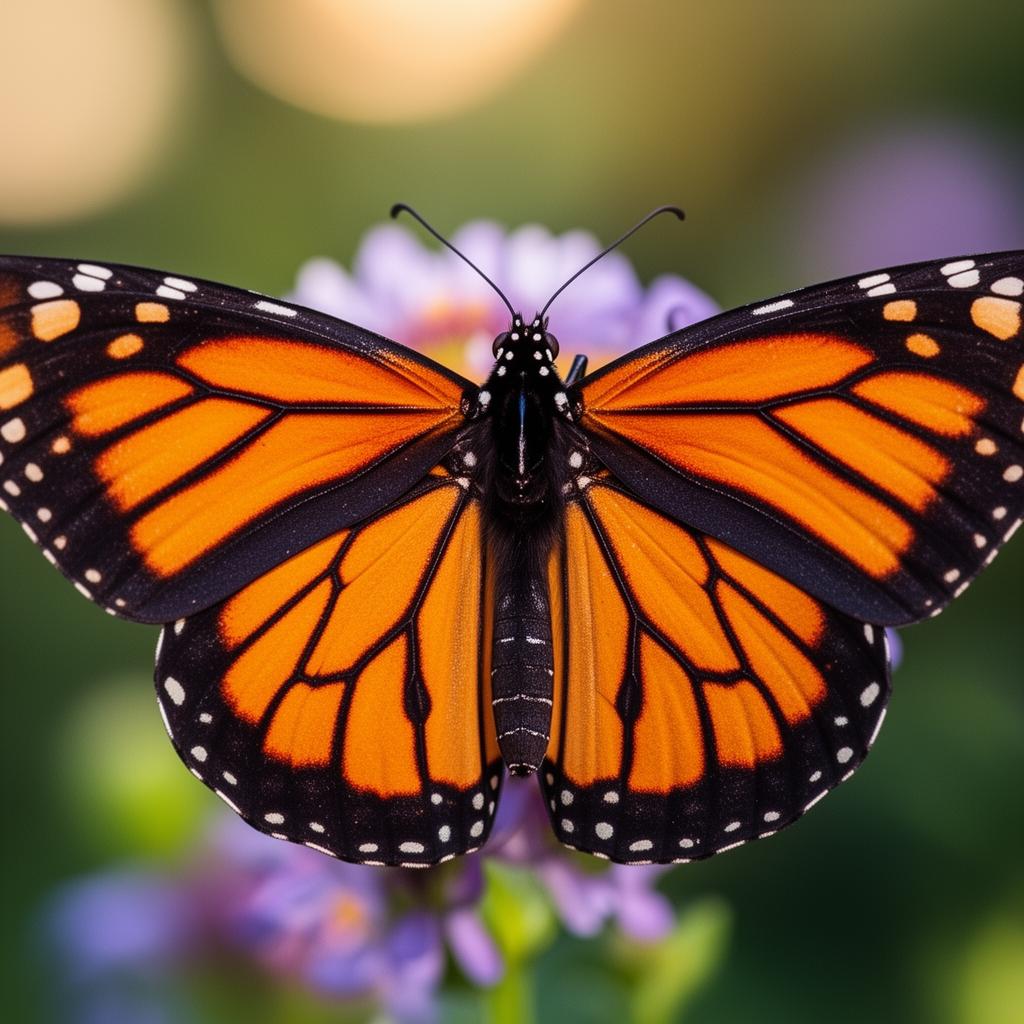
Butterfly wings are covered in thousands of tiny overlapping scales that create beautiful patterns. Some patterns warn predators ('I'm poisonous!'), while others provide camouflage. The blue morpho butterfly's wings aren't actually blue - the colour comes from microscopic structures that reflect light.
Go deeper🗺️ Migration
Monarch butterflies make one of the longest insect migrations - traveling up to 5,000 km from Canada to Mexico each autumn. No single butterfly makes the full round trip; it takes 3–4 generations to complete the journey. They navigate using the Sun and Earth's magnetic field.
Go deeper👅 Feeding and taste
Butterflies taste with their feet! When they land on a plant, sensors on their feet detect chemicals to determine if it's a good place to lay eggs. They drink nectar through a long, coiled tube called a proboscis, which works like a tiny drinking straw and curls up when not in use.
Go deeper🛡️ Defence strategies
Butterflies have clever ways to avoid predators. Some have eyespots on their wings that fool birds into attacking the wrong end. Others mimic toxic species - the harmless viceroy butterfly looks almost identical to the poisonous monarch. Some chrysalises even look like bird droppings!
Go deeper🌿 Butterflies and the environment
Butterflies are important pollinators and vital indicators of environmental health. Scientists monitor butterfly populations to track ecosystem changes. Sadly, many species are declining due to habitat loss and climate change. Planting native wildflowers in gardens can help support local butterfly populations.
Go deeperWatch & Learn
4:12What are Butterflies Facts for Kids?
6:30Butterflies Facts for Kids explained for kids
3:45Fun facts about Butterflies Facts for Kids
Frequently Asked Questions
Explore more in Kids Wikipedia
Dive into hundreds of interactive topics with videos, quizzes, and hands-on activities - all inside Ask Anything.
Open Kids Wikipedia