Dolphins Facts for Kids
Intelligent, playful marine mammals that live in groups called pods.
Select reading age
Dolphins Facts for Kids
Videos & Quizzesincluded
Tell me more →
About this topic
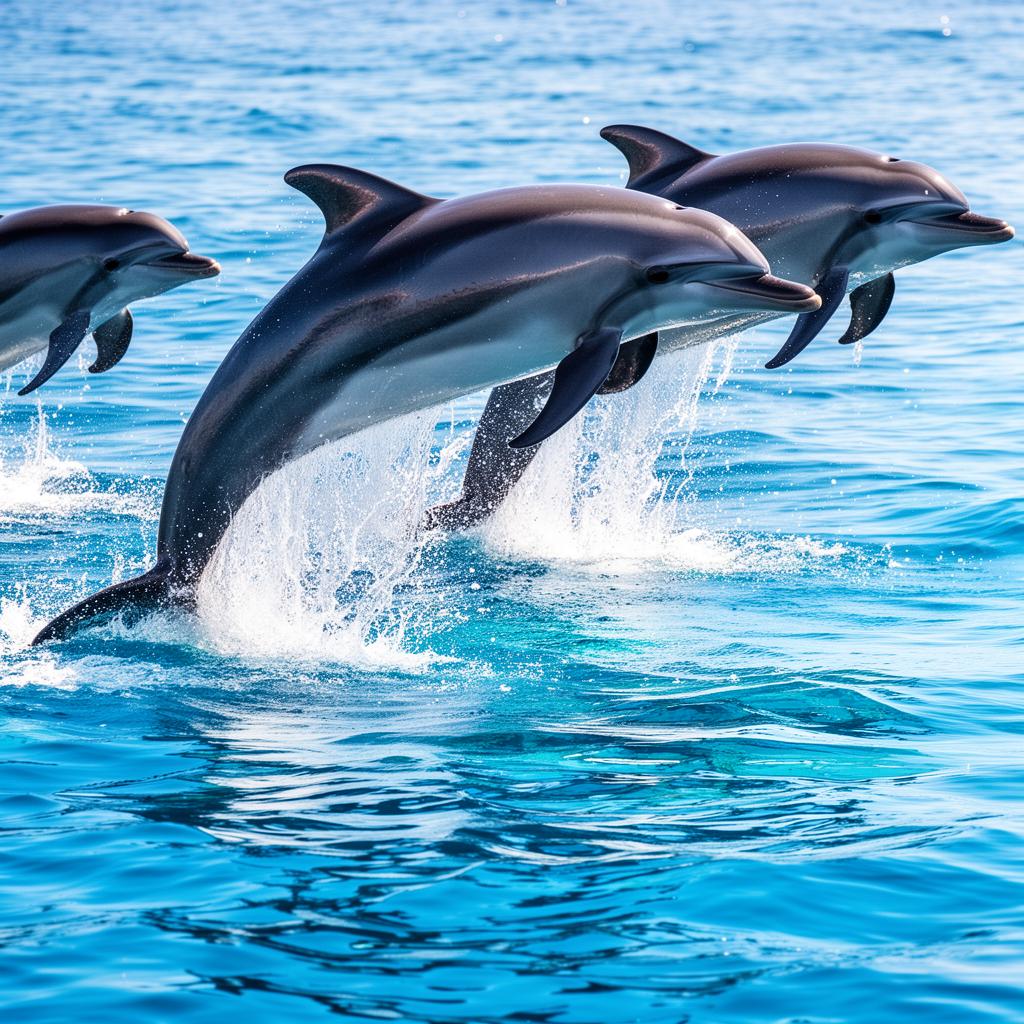
Dolphins are among the most intelligent creatures on Earth. These social marine mammals live in groups called pods and communicate using a complex system of clicks, whistles, and body movements. There are over 40 species of dolphins found in oceans and rivers worldwide, from the common bottlenose dolphin to the striking pink river dolphins of the Amazon.
Quick Facts
Key Points
Dolphins can recognize themselves in mirrors - a sign of self-awareness
They use echolocation (sonar) to navigate and find prey in murky water
Dolphins sleep with half their brain at a time, keeping one eye open for predators
They can hold their breath for up to 10 minutes
Each dolphin has a unique signature whistle, like a name
Bottlenose dolphins have been observed using sponges as tools to protect their snouts while foraging
Dolphins have been known to help humans - ancient Greek sailors reported dolphins guiding ships
A dolphin's brain is larger relative to body size than a chimpanzee's
Photos

📡 Echolocation
Dolphins emit rapid clicks that bounce off objects and return as echoes. By analysing these echoes, they can determine the size, shape, distance, and even the internal structure of objects. This biological sonar is so precise that dolphins can detect a small fish buried in sand from several metres away.
Go deeper👥 Social life
Dolphins live in complex social groups called pods, which can range from a handful to over 1,000 individuals. They cooperate to hunt fish, protect each other from sharks, and care for sick or injured pod members. Young dolphins stay with their mothers for 3–6 years, learning essential survival skills.
Go deeper🧠 Intelligence
Dolphins show many signs of high intelligence: they use tools, solve complex problems, and can learn to understand grammar in sign language experiments. They play games, have cultural traditions that vary between pods, and even mourn their dead - spending hours swimming beside a deceased companion.
Go deeper🗣️ Communication
Each dolphin develops its own unique 'signature whistle' - essentially a name that other dolphins use to call them. They also use body language: leaping, tail-slapping, and jaw-clapping all carry different meanings. Some researchers believe dolphin communication may be more complex than we currently understand.
Go deeper🤝 Dolphins and humans
Humans and dolphins have a long history together. There are many documented cases of dolphins protecting swimmers from sharks and guiding lost boats to safety. In some parts of the world, dolphins and fishermen cooperate - dolphins drive fish toward nets and benefit from the stirred-up catch.
Go deeper🌊 Conservation
Many dolphin species face threats from fishing nets (bycatch), ocean pollution, and habitat degradation. Plastic pollution is particularly dangerous as dolphins can ingest or become entangled in debris. Marine protected areas and fishing regulations help protect dolphin populations worldwide.
Go deeperWatch & Learn
4:12What are Dolphins Facts for Kids?
6:30Dolphins Facts for Kids explained for kids
3:45Fun facts about Dolphins Facts for Kids
Frequently Asked Questions
Explore more in Kids Wikipedia
Dive into hundreds of interactive topics with videos, quizzes, and hands-on activities - all inside Ask Anything.
Open Kids Wikipedia