 Mia Chen
AI as a Creative Partner
Think of AI as a tireless creative assistant. It can generate starting points, suggest improvements, handle technical complexity, and help kids iterate faster. A child who says 'draw me a dragon in a forest' can get an instant visual to trace, modify, or use as inspiration - removing the blank-page paralysis that stops many kids from starting. This isn't about AI doing the creative work - it's about AI removing the barriers between a child's imagination and their ability to express it. The creative decisions still belong to the child.
Learning Through AI Collaboration
When kids interact with AI tools, they learn to communicate clearly, think critically about outputs, and make creative decisions. 'Make it more purple' or 'add a sad melody' teaches them to articulate artistic intent - a skill that transfers to writing, presenting, and storytelling. Every interaction with an AI tool is a lesson in communication precision. Kids quickly learn that vague prompts produce vague results, and specific prompts produce specific results - a lesson in clear thinking that benefits them across all subjects.
The Prompt Engineering Mindset
When children learn to direct AI through prompts, they're developing a uniquely 21st-century skill: the ability to communicate effectively with machines. This isn't just about getting better AI outputs - it's about learning to think clearly and communicate precisely. Kids who practise prompt engineering develop stronger writing skills, better logical thinking, and a deeper understanding of cause and effect. The iterative process of refining prompts (try, evaluate, adjust, repeat) is essentially the scientific method applied to language.
AI-Assisted Art and Design
AI art tools don't replace drawing skills - they complement them. A child can generate an AI reference image and then trace or modify it by hand, learning proportions, composition, and colour in the process. AI can fill in backgrounds while the child focuses on the character. It can suggest colour palettes that the child then applies. The most creative kids use AI as one tool among many, combining AI-generated elements with hand-drawn work, pixel art, and photography to create truly original mixed-media pieces.
AI in Music and Sound
AI music tools are perhaps the most democratising creative technology available to children. A child with no musical training can describe the mood they want - 'something happy and bouncy' - and get a starting point to build from. They can then adjust tempo, add instruments, change keys, and experiment with structure. The AI handles the technical theory while the child makes the creative decisions. This lets kids focus on expression and experimentation rather than spending months learning scales and chord progressions before they can create anything.
Ethical AI for Young Minds
AI tools for children must be designed differently. Outputs need to be age-appropriate, interactions should be educational, and the technology should assist rather than replace learning. At DIY.ORG, every AI feature is filtered, curated, and designed to teach alongside creating. We also believe in transparency: kids should understand that AI is a tool, not magic. They should know that AI learns from data, can make mistakes, and doesn't truly 'understand' the way humans do. This critical awareness prepares them to use AI responsibly as they grow up.
The Future of AI + Kids
We're at the beginning of a revolution in creative education. AI tools will become more capable, more intuitive, and more accessible. The children who learn to work with AI creatively today will have a significant advantage in whatever career they choose. But the goal isn't to create AI-dependent creators - it's to use AI as a scaffold that supports children while they build their own skills. The best AI tools gradually step back as the child's abilities grow, eventually becoming a reference and refinement tool rather than a crutch.
 James Lee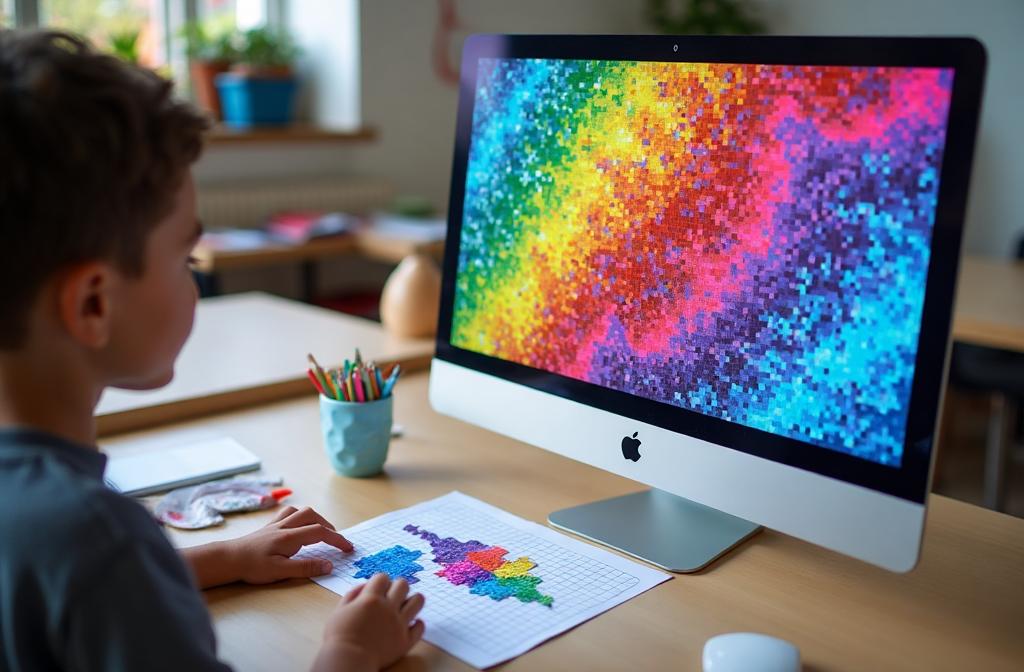
 Sara Kim
 Alex Rivera