Mia Chen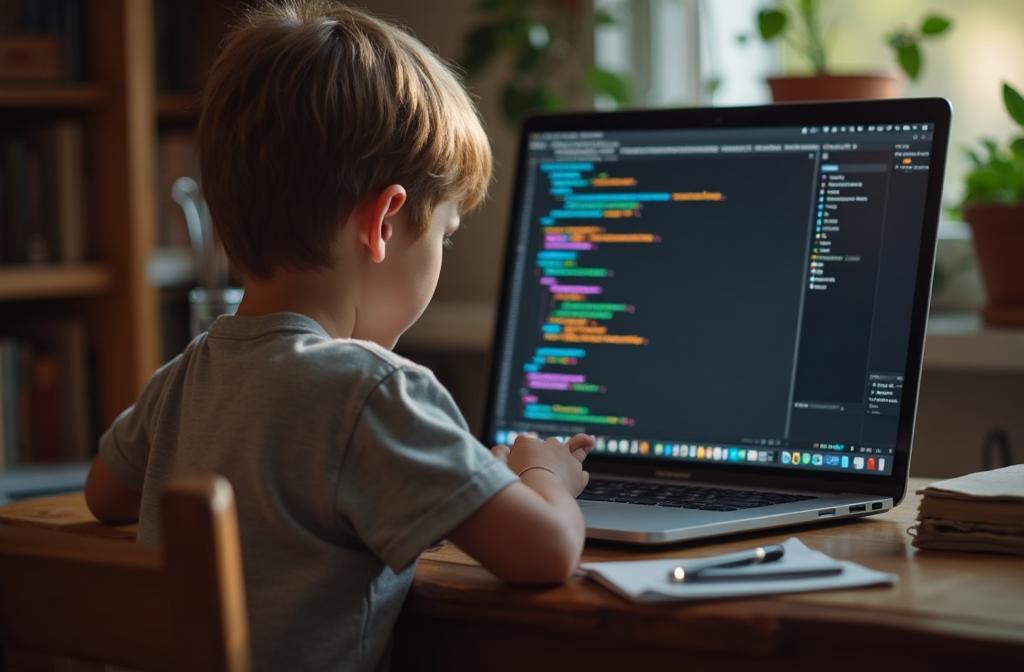
Why Start with Visual Coding?
Block-based coding tools like Scratch and our Code Lab let kids see the logic behind their programs. Instead of syntax errors, they focus on solving problems - making a character jump, creating a quiz, or building a simple game. This builds computational thinking without the frustration of traditional text-based languages. Research from MIT's Lifelong Kindergarten group shows that children who start with visual coding develop stronger mental models of how programs work. They can trace the flow of logic by following coloured blocks, which makes abstract concepts like loops and conditionals feel tangible and concrete.
The Best Age to Start
Kids as young as 5 can begin with simplified drag-and-drop tools. By 8–10, most children are ready for more structured projects with loops, variables, and conditional logic. The key is matching complexity to confidence - start simple, celebrate wins, and gradually increase the challenge. Every child develops at a different pace, so don't compare your 7-year-old to someone else's. Some kids naturally gravitate toward logic puzzles and sequences, while others prefer creative expression through code - making art, music, or stories. Both paths are equally valid and develop the same core computational thinking skills.
From Blocks to Text
The transition from visual to text-based coding is easier than you'd think. Kids who've spent time with block editors already understand variables, loops, and functions - they just need to learn the new syntax. Python is an excellent next step because its readable syntax feels closest to plain English. Many platforms now offer 'hybrid' modes that show the text equivalent alongside blocks, so kids can see the connection between what they've been building visually and what it looks like in code. This bridging approach makes the transition gradual and natural rather than a sudden, intimidating leap.
Project-Based Learning Works Best
The most effective way to teach coding is through projects kids actually care about. Instead of abstract exercises, let them build a birthday card for a friend, a quiz about their favourite animal, or a simple platformer game. When the goal is personally meaningful, kids push through challenges that would otherwise feel tedious. Project-based learning also mirrors how professional developers work - solving real problems, not completing isolated drills. By building complete projects, children learn not just individual coding concepts but how they fit together into a working whole.
The Role of Debugging
Every programmer spends more time fixing bugs than writing new code, and kids are no exception. But here's the secret: debugging is where the deepest learning happens. When a character moves the wrong way or a score doesn't update, kids must trace through their logic step by step, testing hypotheses and ruling out possibilities. This is scientific thinking in action. Resist the urge to fix bugs for your child. Instead, ask guiding questions: 'What did you expect to happen? What happened instead? Where do you think the problem might be?' These prompts build resilience and independent problem-solving skills that extend far beyond coding.
Coding as Creative Expression
Too often, coding is framed as a purely technical skill - something you learn for career preparation. But for kids, the real magic of coding is creative expression. Code is a medium, like paint or clay, that lets children bring ideas to life. A child who codes an interactive story is both an author and a programmer. A child who builds a generative art piece is both an artist and an engineer. When we position coding as a creative tool rather than a vocational skill, children approach it with more enthusiasm, more imagination, and more willingness to experiment. The technical skills follow naturally from the creative motivation.
Building a Supportive Environment
The environment matters as much as the tool. Create a space where experimentation is celebrated and 'mistakes' are reframed as discoveries. Share your own learning experiences - kids need to see that adults struggle with new things too. Consider coding together as a family activity: pair programming with a parent or sibling builds communication skills alongside technical ones. Online communities designed for young coders can also provide motivation through sharing and feedback, but make sure any platform is moderated and age-appropriate.

 James Lee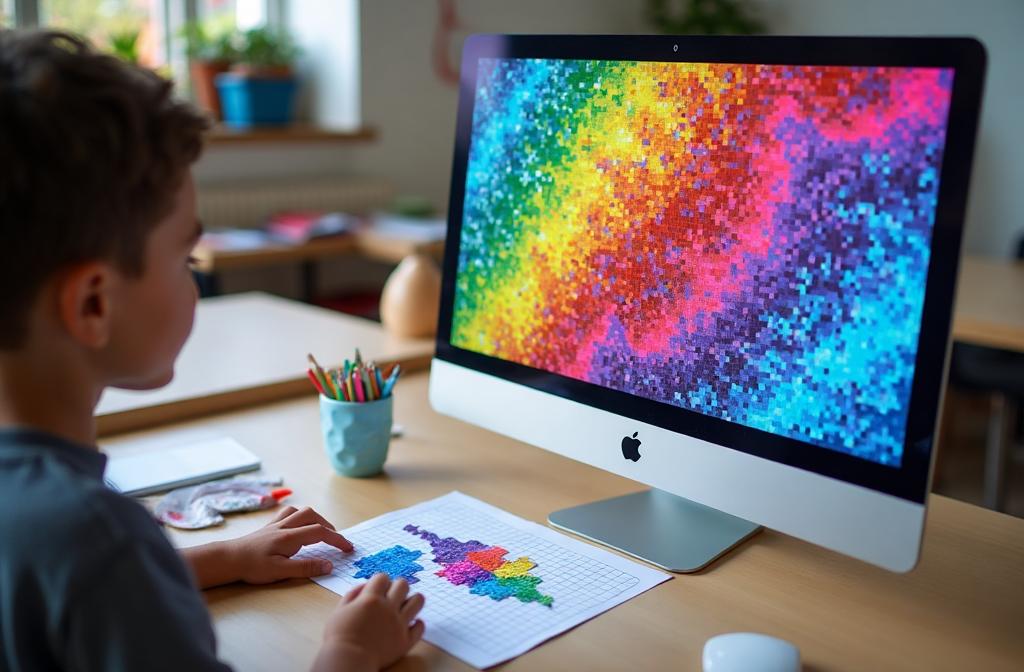
 Sara Kim
 Alex Rivera