Alex Rivera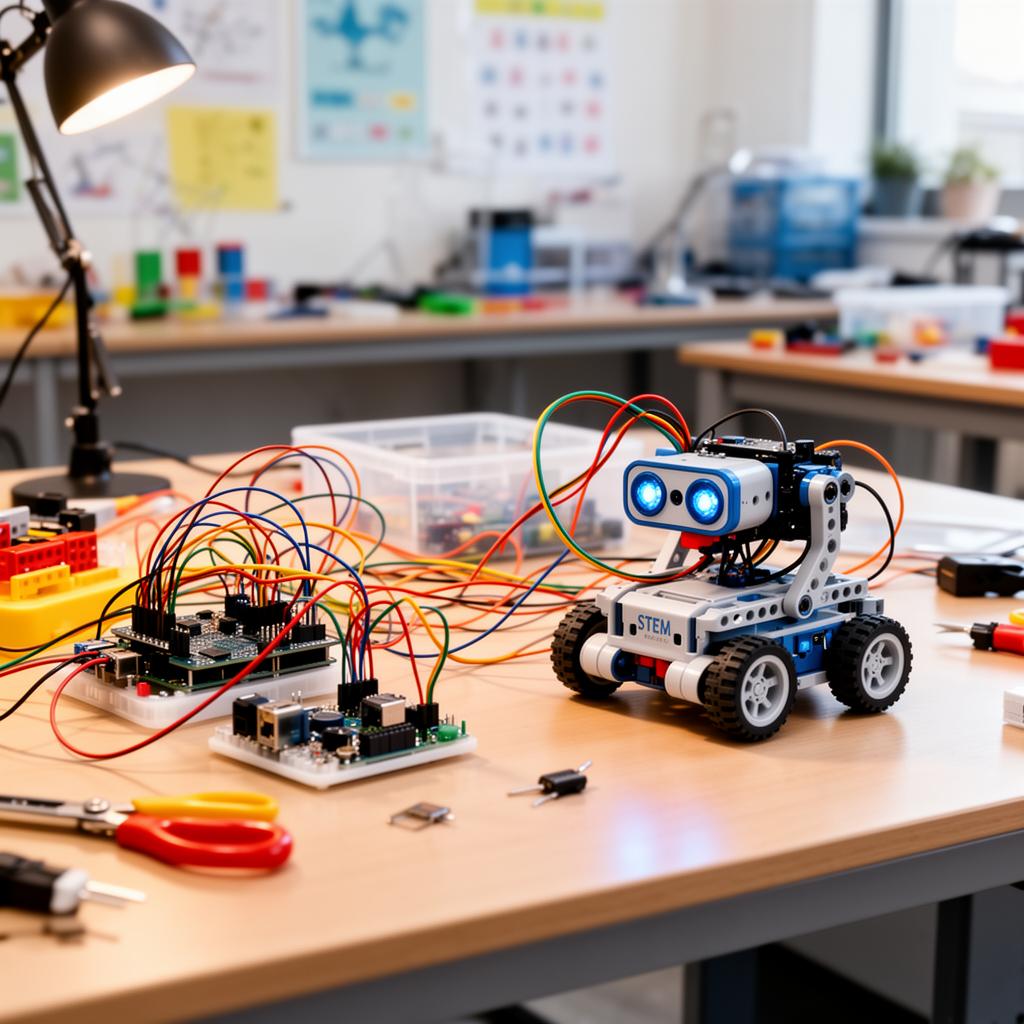
Robotics Thinking Without Robots
The core of robotics education isn't the robot - it's the thinking process. Designing a solution, building a prototype, testing it, finding failures, and iterating. Kids can practice this with virtual robots, simple circuits, or even paper prototypes. The mindset matters more than the hardware. When a child designs a cardboard arm that can pick up a marshmallow, they're practising the same engineering design process used at NASA and SpaceX - just with more accessible materials. The sophistication of the tool doesn't determine the sophistication of the thinking.
The Engineering Design Process
Every engineering project follows the same cycle: identify a problem, brainstorm solutions, design a prototype, build it, test it, evaluate what worked and what didn't, and improve. This iterative process is the foundation of all engineering disciplines - and it's incredibly empowering for children. Unlike schoolwork where there's usually one right answer, engineering problems have many valid solutions. This open-ended nature encourages creative thinking and teaches kids that the first attempt is rarely the final one - and that's perfectly fine.
From micro:bit to Arduino
Physical computing has become incredibly accessible. A micro:bit costs less than a pizza, plugs into any computer, and can be programmed with visual blocks. For older kids, Arduino boards open up limitless possibilities - LED displays, sensors, motors, and real-world interaction. The progression from micro:bit to Arduino mirrors the blocks-to-text transition in coding: the concepts stay the same, but the tools become more powerful. Kids who start with micro:bit's visual programming can transition to Arduino's C-based syntax with the confidence that they already understand the underlying logic.
Sensors and the Real World
What makes physical computing magical for kids is the connection to the real world. A temperature sensor that changes an LED colour. A light sensor that plays music when it gets dark. A motion sensor that triggers a greeting. These projects bridge the gap between digital and physical in a way that pure screen-based coding never can. When kids programme sensors, they begin to see the invisible technology in everyday objects - automatic doors, smartphone screens, car parking sensors. This awareness transforms them from passive technology users into curious technology understanders.
Engineering for Everyone
Robotics competitions often feel exclusive, but engineering thinking is for everyone. Kids who build marble runs, design paper bridges, or create cardboard machines are all practising engineering. The goal is to nurture curiosity about how things work and confidence to make things that don't exist yet. Diversity in engineering is essential for building a better world, and that diversity starts in childhood. When we make engineering accessible to every child - regardless of gender, socioeconomic background, or prior experience - we expand the pool of future problem-solvers.
Failure Is the Curriculum
In robotics, failure isn't just acceptable - it's the entire point. Every engineer knows that the path to a working solution runs through dozens of failures. Teaching kids to embrace failure, analyse what went wrong, and try again is perhaps the most valuable lesson robotics offers. This 'growth mindset' transfers to every area of life. Children who learn to iterate through failures in engineering projects show greater resilience in academic challenges, social situations, and personal goals. The habit of treating setbacks as data rather than defeat is genuinely life-changing.
Building a Home Engineering Lab
You don't need a dedicated workshop to start engineering at home. A kitchen table, some cardboard, tape, scissors, and a micro:bit is enough to begin. Add rubber bands, paper clips, straws, and wooden sticks for structural projects. Collect recyclables for building materials. The most creative engineering happens with constrained resources - when kids can't buy a perfect solution, they must invent one. Set up a 'tinker box' with assorted materials and let your child explore. The projects they invent themselves will be more engaging and educational than any prescribed kit.
 Mia Chen
 James Lee
 Sara Kim